New term, new Society interview! Our team interviewed Sixth Form engineering students, Monty and Fraser, hard at work alongside the team’s robots. We talked to them about their typical progress, experiences and take on Robotics as a subject. Here it is below:
Give us a rundown of a typical P7 in Robotics Society.
Monty: Mainly building things, breaking things, then starting over again – gradual improvements. A quite accurate definition of our general sessions.
Fraser: Normally, it’s keeping progress of everything we’ve done, looking towards everything we’ve made and looking at their different attributes. We follow a clear line of progression and improve as best as we can.
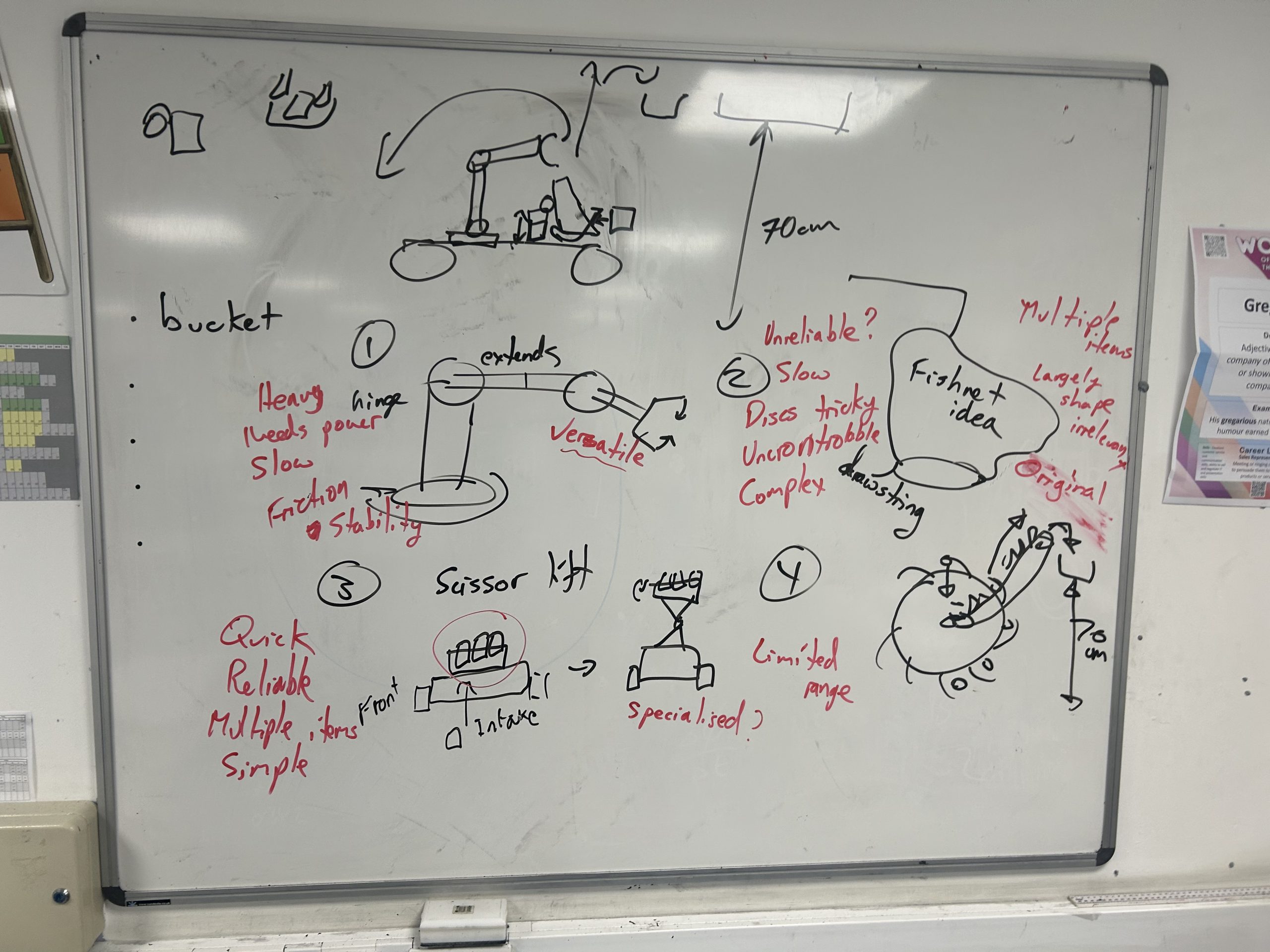
Monty: This year, the overall goal for our competition was to make our robot pick up hand-sized balls and throw them into a basket.
Fraser: We got marked on everything to do with our robot – its programming, coding, designing parts, and graphics strategies.

What is the society currently working on?
Fraser: Now that our main competition’s over, we’re looking to design many more robots to be used in the future. There isn’t a released competition at the moment (our most entered one is usually released in September), so at the moment we’re building generic robots and practicing our skills. What we make also goes towards the new team; any newcomers who’ll take it and build further for next year.
What has been your best memory as part of Robotics Society?
Monty: There’s an interesting sense of politics behind co-operating with your teammates, and alliances are often made from the different teams helping you qualify for the next round. Working with other teams from different schools is an important part of our competitions. The results could end up as 50% of your actual robot and 50% the other teams’ efforts and interaction with yours.
Fraser: For me, the best part is seeing the robot finally come together. When you see all the different parts, it may not seem like there’s much there. But when it all comes together, it’s very nice.

What is something that you think people wouldn’t know about Robotics Society?
Fraser: It’s not just engineering. People think about robotics, and they immediately think it’s going to be about engineering, but we’d love people from different sectors to join.
Monty: Yes, we do need other people in different departments – a lot already happens, and design is a major part of our process.
Fraser: It’s all about strategy, and we need more people working with our design in the background. For example, last year we held a school-wide competition to design our robot cover. We had lots of entries, and the winning one was used for one of the projects we’re working on now. As such, we’d love people on the team who can create things like that. It’s not just engineering, it’s so much more.
Why should more people join Robotics Society?
Monty: It’s great. It’s great for building up skills leading to engineering, it’s good for your CV and future plans. Choosing Robotics applies to all the different STEAM roles (Science, Technology, Engineering, Art, Mathematics): people in design, or if you’re planning to do engineering, for example.
Fraser: We’re both planning to take engineering in the future – again, Robotics Society fits a variety of roles, not just for engineers. It’s for people who like designing things, making new projects. I’ve been able to apply myself in this field well.
How does the society support members pursuing different Robotics related career paths?
Monty: Looking into Robotics, there’s a number of different aspects that make it what it is. There’s mechanical engineering, building physical things, then the programming side, getting it to do things with the push of a button. Then there’s the electrical side, wiring the robot together.
It’s an intuitive process. You put something together, realise it’s the wrong size, then try and try again. It trains you up excellently for future jobs in Robotics.
What type of events do you look forward to taking place in Robotics Society? (UCAS fairs, trips to universities, etc)
Fraser: There’s always the competition next year. It’s a group of local schools in the area, that then advances to regionals- the South-East of England, for example. These schools build robots, partake in competitions against other robots, and the highest-performing in those rounds advances. For example- for our last competition, the criteria was that the robot which performed the assigned task best advanced to the next stage.
Monty: It’s called the First Tech Challenge, and that’s an international competition- all over the world. If you’re really good, you could have a chance to make that stage and win the championship. We do competition trips too- we have another upcoming competition involving making a design prototype and getting to test it against other teams. It’s great.
– Kate