What is the aim of product design? To make customers buy and use the products you make. It is very easy to say but it is difficult to achieve just relying on design- this is why product design relies on psychology to help tailor a product to the consumer’s needs. Product design is crucial in today’s society with consumers demanding a lot out of the products they use.
Defining what makes a good product is very subjective, but the products that have the best reactions are products that contain these four criteria: colourful, easy to use , environmentally friendly , and the use of tailoring to a specific audience. Here are these factors in more detail:
Colour can provoke different emotion in the human brain. For example red is associated with passion and excitement, and is widely used in food branding; black is used for products that are in luxury sections because it makes the product seem more expensive; blue connotes trust and calmness, usually used in corporate or tech industries. All of these colours can influence consumer perception of the product. Usability, this is the key factor that will make your product stand out (every product needs to be usable but if your product goes above the ordinary functionality, it is more likely to be noticed). If a product is easy to use, the user will be: satisfied with the product, achieve want they want from the product easily without stress or unnecessary effort, and ultimately want to keep using it.
Environmentally friendly products are becoming increasingly needed in today’s materialistic society. When a product is sustainable, many consumers will be more drawn to your product over others meaning your product will have the upper-hand in the market. Due to many products ending up in landfill, it is key that products are designed to last and to be repeatedly used opposed to single use products.
Tailoring to the audience is a clever marketing technique that can make your product more desirable to certain audiences. This is because different audiences want different things from a product. Babies require a product that has bright bold colours and has simple shapes. Since babies are constantly developing and learning, they need toys that will help them with this, for example motor skills, complex thinking and problem solving. Now thinking about the opposite end of the spectrum, products designed for the elderly are much less colourful and rely more on functionality.
There are many products that display the criteria mentioned above. Many products have their own unique way of grabbing the consumers attention.
Here is a Pringles tube. This has many interesting design and psychological techniques that ultimately makes the consumer want to buy and eat the product. The branding of this Pringles tube is obvious and eye-catching, when you see that curved face and the moustache, you know what you’re buying. The food imaging is telling people what to expect inside the tube; this also links to the colour, instantly seeing that pink of the tube the consumer knows these Pringles are prawn cocktail flavoured.
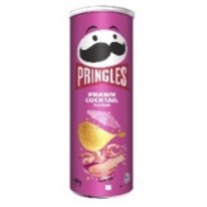
These design features have been altered over the years but these techniques can all link back to Frederic J Baur. In 1966, he designed the tube to be a tight fit when you reached your hand in, this created a higher level of desire for the crisps inside and made the consumer take more at a time. Baur could have easily created a wider tube, allowing the consumer’s hand to fit in with less resistance, but as a result of this, the crisps would have been less desired, therefore eaten slower.
For designers, it is important to consider the psychology behind a product because knowing how the consumer will perceive the product allows them to design products that appeal to their cognitive functions and behavioural processes. This ensures the product is appealing to buy and can also lead to the creation of the USP.
Consumers rarely buy based on logic alone, they buy based on feelings, identity, and aspirations. Emotional design transforms a functional tool into a brand staple. Designers can exploit this and in a way, manipulate the consumer into thinking they need this product in their life.
In conclusion, understanding the psychology behind a product is essential because it dictates how users perceive value, form habits, and make purchasing decisions.
Psychology links with product design in three key ways: It dictates how the consumer reacts to the product, it persuades them to buy the product, and it helps tailor the product to the customer’s needs.
Edwards, D. (2024). The Science of Colour in Product Design. [online] JONDO UK. Available at: https://www.jondo.co.uk/post/the-science-of-colour-in-product-design.
Makingscience.co.uk. (2018). Psychology in digital product design – Making Science. [online] Available at: https://www.makingscience.co.uk/blog/psicologia-en-el-diseno-de-producto-digital/ [Accessed 20 May 2026].
Staff, C. (2025). What Is Usability? Designing for Ease. [online] Coursera. Available at: https://www.coursera.org/gb/articles/what-is-usability-and-why-it-matters [Accessed 15 May 2026].
Volf, M. (2016). Karim Rashid’s Garbo at 20: Does It Still Hold Up? [online] Metropolis. Available at: https://metropolismag.com/viewpoints/karim-rashids-garbo-20/.
WRAP. (2025). Embedding Environmental Sustainability in Product Design. [online] Available at: https://www.wrap.ngo/resources/guide/embedding-environmental-sustainability-product-design [Accessed 15 May 2026].
- Alice and Hannah