 By Aadya
The age-old question: is horse riding really a sport? It is a topic that has sparked debates for years, with some arguing that it deserves its place alongside traditional sports, whilst others remain unconvinced. But who is actually right?
Horse riding, also known as equestrian sport, has featured in the Olympic Games for over a century, first appearing in 1900. It is recognised by the International Olympic Committee and governed by international sporting regulations. Surely, that counts for something?
Beyond its official recognition, horse riding requires considerable levels of both physical and mental strength. Riders must work in complete harmony with an animal weighing around 1000 pounds, using their legs, core, and balance to guide and control it. This takes far more physical effort than it might appear from the side lines. However, the mental demands are just as significant, particularly when dealing with setbacks such as falls or accidents causing injuries to both horse or rider.
I started horse riding at the age of nine, and I have experienced first-hand just how important mental resilience can be. After falling off a horse, I struggled for months with a mental block that made getting back on incredibly difficult. I had to retrain my own fight-or-flight response, convincing myself that falling off once did not mean it would happen every time I got on. Despite my body telling me to freeze, I had to overcome that fear.
One of the most common arguments against horse riding being a sport is that ‘the horse does all the work.’ Having spent years riding, I can confidently say that this is far from the truth. To someone who has never sat on a horse, it might look as though the rider is simply sitting there while the horse does everything. In reality, if I simply sat there, the horse would either stand still or wander around aimlessly. The rider must constantly work alongside the horse, coordinating their balance, directing its movement, and providing precise instructions. Without this partnership, things can quickly go wrong.
When a rider is unstable or fails to give the correct instructions, the horse can become unbalanced, making even relatively simple movements difficult. Take jumping as an example. Before approaching a jump, the rider must ensure the horse has enough energy and that they remain relaxed, as horses can notice a rider’s emotions. They must then keep the horse on a straight approach, maintain contact with their legs, and prepare for take-off. As the horse jumps, the rider must move into the correct jumping position, lifting out of the saddle without going too high, allowing their hands to move forwards while maintaining control, and keeping their eyes focused on what comes next. Even after landing, they must navigate the corner correctly and prepare for the next obstacle. There is an enormous amount to think about in a matter of seconds. Get any of it wrong, and the horse could lose its balance, misjudge its take-off distance, or even refuse the jump altogether.
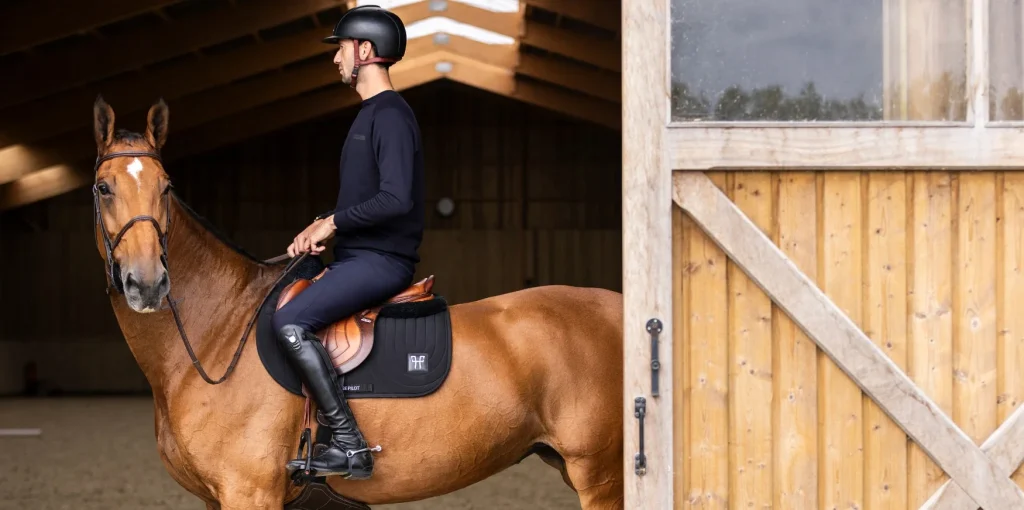
Ultimately, I believe horse riding is undoubtedly a sport. It is a demanding combination of physical ability, mental resilience, coordination, and trust. It involves communicating silently with a 1000 pound animal, travelling at speeds of up to 15mph around an arena, knowing that anything could happen.
The horse may provide the power, but it is the rider who provides the direction, balance, and control. So, perhaps the real question isn’t whether horse riding is a sport, but why there is still any debate about it?
- Erin, Y11
 Daniella
 QG Team