This article talks about the science behind food and why certain food work the way they do. Every time we bake, boil, season, or stir, we trigger reactions that change the structure, flavour, and appearance of our ingredients. Understanding these reactions helps us appreciate why certain techniques work so well and why cooking is, in many ways, a practical science lesson disguised as a daily activity. We will be exploring the chemistry behind fermentation, chocolate tempering, why seasoning works, how heat affects cooking and the infamous red cabbage indicator.
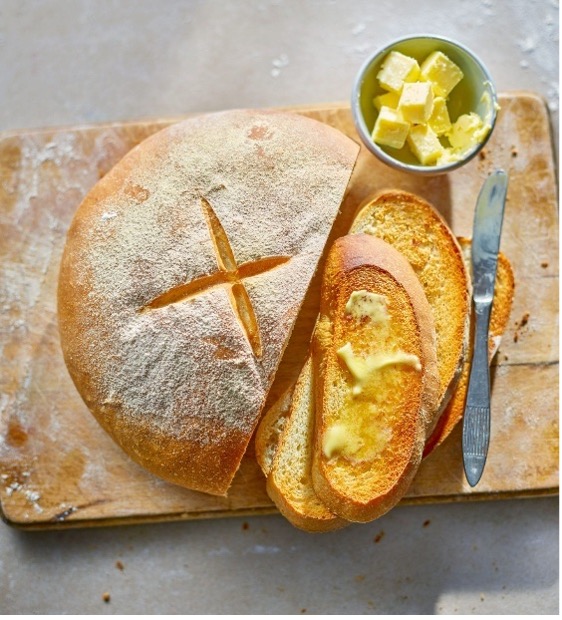
Starting off with fermentation. It is a biochemical process in which microorganisms such as yeast and bacteria break down sugars in the absence of oxygen. Although this may sound like something that belongs in a laboratory, fermentation is responsible for some of the world’s most familiar foods. For example, in bread-making, yeast feeds on the sugars released from flour and produces carbon dioxide and ethanol. The carbon dioxide becomes trapped within the dough, causing it to rise and giving bread its characteristic airy texture. Meanwhile, the gluten network in the dough stretches like elastic, holding the gas in place until the heat of the oven sets the structure permanently.
When we cook, we constantly rely on three types of heat transfer conduction, convection and radiation often without realising it, and each one shapes our food in different ways.
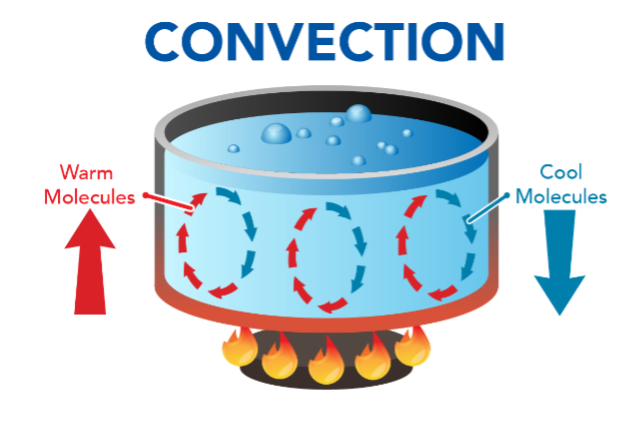
Conduction occurs when heat moves through direct contact, such as when a frying pan transfers heat straight into a pancake or a steak, creating browning and crisp surfaces. Convection happens when heat travels through moving fluids like boiling water or circulating air in an oven, which is why pasta cooks evenly in a rolling boil and cakes rise uniformly in a fan oven.
Radiation, on the other hand, transfers heat through electromagnetic waves, allowing food to cook without touching the heat source at all; this is what happens when a grill browns the top of vegetables or when a broiler caramelises the surface of a dish. This explains why different techniques produce such distinct textures and flavours.
Another example of science in food is chocolate tempering. Cocoa butter, the fat inside chocolate, is made of symmetrical triglycerides that can crystallise into six different forms, but only Form V gives chocolate its ideal qualities.
To achieve this, chocolatiers use a precise heating and cooling cycle where the chocolate is heated to around 45°C to melt every crystal form. It is then cooled to 27°C, where Forms IV and V begin to form, and finally warmed slightly to 32°C, to melt the unstable Form IV crystals but preserve Form V. These remaining crystals act as seeds, guiding the entire mixture into the correct structure. This is why tempered chocolate has a shiny surface, a clean snap, and a melting point just below body temperature, giving it a silky mouthfeel.
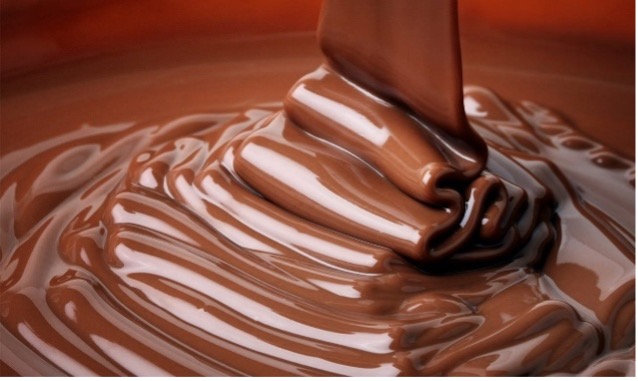

Proper tempering also prevents fat bloom, the white streaks that appear when unstable crystals separate and reform on the surface. This process mirrors how igneous rocks form in volcanoes. Like chocolate can crystallise into six forms, cooling magma solidifies into minerals such as olivine, pyroxene, and feldspar. Slow underground cooling produces large, stable crystals in rocks like granite, while rapid cooling at the surface forms fine‑grained basalt or even volcanic glass. In both cases, temperature controls crystal size, stability, and texture, showing how similar principles appear in both science and cooking.
Seasoning is another example of science in everyday life. Salt enhances flavour in several ways: it suppresses bitterness by blocking bitter‑taste receptors, which makes sweetness and umami more noticeable. It also releases aromatic and volatile compounds, the molecules responsible for most of what we perceive as flavour. Salt changes the ionic strength of food, pushing these aroma molecules into the air so we smell them more intensely. In meat, salt interacts with proteins, loosening their structure and increasing water‑holding capacity. This is why salted or brined meat becomes juicier and more tender.
Seasoning also relies on diffusion and osmosis. When salt dissolves on the surface of food, it creates a concentration gradient. Sodium and chloride ions diffuse inward, while water moves outward through osmosis. Once salt has penetrated, other flavour molecules- herbs, spices, marinades- follow more easily. Heat then drives reactions like the Maillard reaction, which produces hundreds of new flavour molecules and the brown crusts on roasted or seared foods. The timing of seasoning also change the flavour and texture of food: early seasoning allows diffusion, seasoning during cooking improves browning, and seasoning at the end gives an immediate flavour burst.
Finally, the red cabbage indicator is an example of acid–base chemistry in food. Red cabbage contains anthocyanins, pigments that change structure depending on pH. In acidic environments they appear red, at neutral pH they turn purple, and in alkaline conditions they shift to blue, green, or yellow. This dramatic colour change makes red cabbage a natural pH indicator and explains why adding lemon juice or baking soda can alter the colour of foods. It also shows how pH affects taste, texture, and preservation, linking everyday cooking to science learnt in school.
- Rutvi and Nayraa