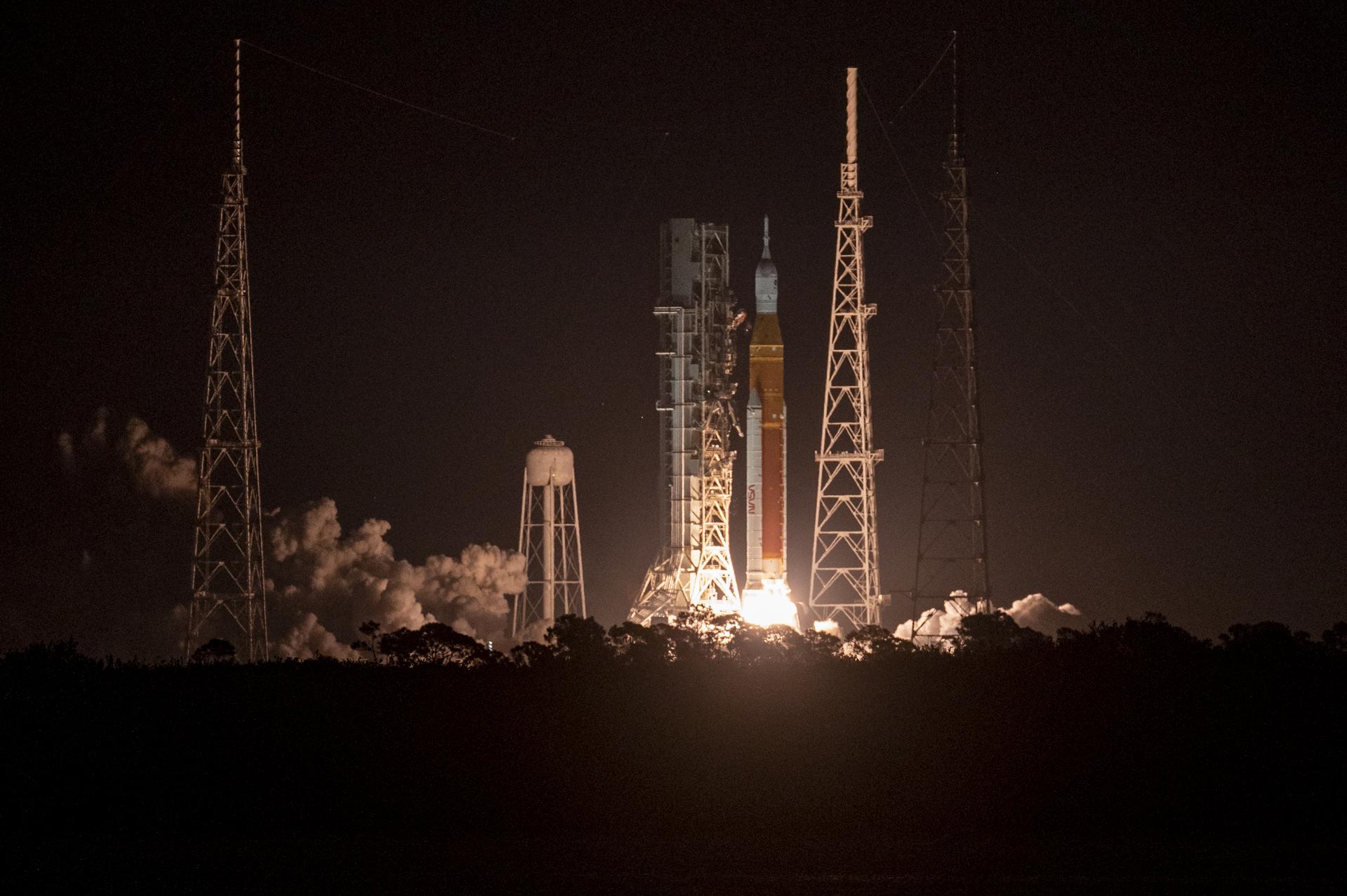
If you’ve been watching the news recently, you’ll have likely seen the same words show throughout the Easter Holidays: ‘Artemis Mission’, ‘NASA’, and ‘Moon’, to name a few.
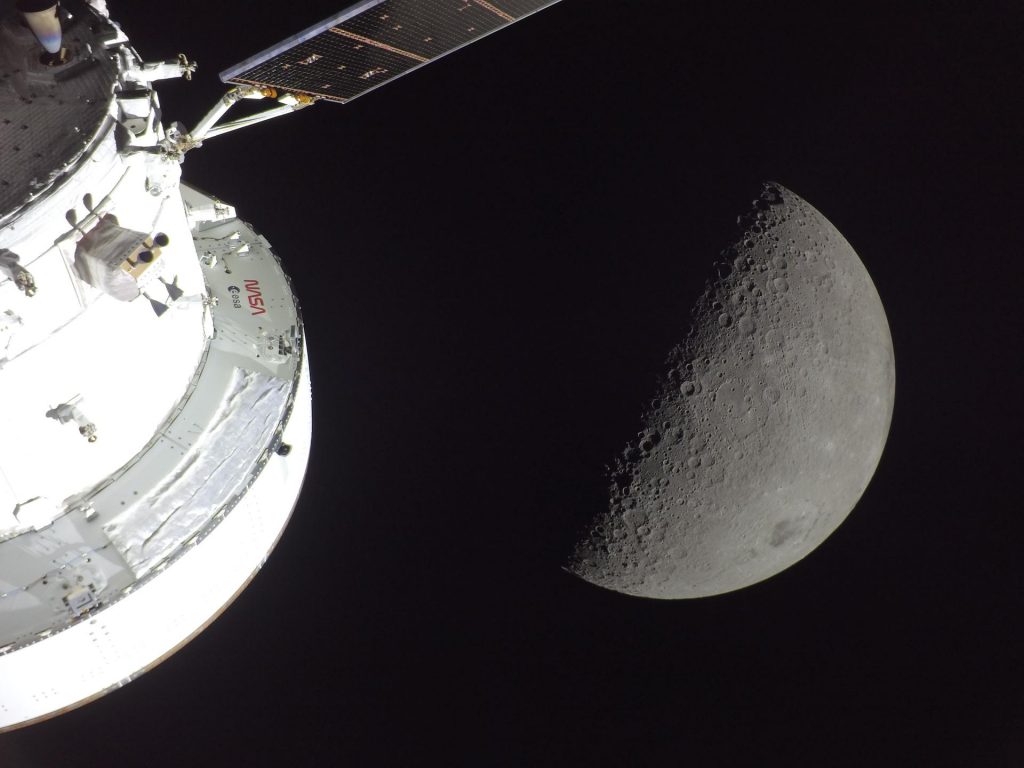
That’s because on April 1st 2026, the four-manned crew of the Orion spacecraft blasted off to the moon for the first time in over half a century. They smashed the record for furthest human space flight and became the first humans to see the far side of the moon. The crew also got to suggest names for two of its craters and witness a solar eclipse from the far side of the moon.
That’s because on April 1st 2026, the four-manned crew of the Orion spacecraft blasted off to the moon for the first time in over half a century. They smashed the record for furthest human space flight and became the first humans to see the far side of the moon. The crew also got to suggest names for two of its craters and witness a solar eclipse from the far side of the moon.
After the 10-day journey, Christina Koch commented on the trip: “Earth was just this lifeboat hanging undisturbedly in the universe… Planet Earth, you are a crew.”

This trailblazing journey, however, will not be the last of NASA’s Artemis missions. With five missions planned in total (and more scheduled to take place once a year), the American agency plans to both execute the first moon landing in fifty years and build a working moon base for long-term exploration.
So, what’s the Artemis Programme looked like so far? And what’s its trajectory for the future?
First, let’s begin with Artemis I in 2022, a stepping stone to mark humanity’s continued venture to the stars. An uncrewed mission, the 26-day journey aimed to take a lunar flight test going around the moon and back. This was the first time NASA’s Orion spacecraft and Space Launch System (SLS) would be tested in real time. Performing a total of five engine burns during the mission, a translunar injection burn (TLI) was used to shoot the rocket towards the gravitational influence of the moon – what Artemis II would later perform to such accuracy no correction burns would be needed.
On Day 6 of the vessel’s whistle-stop space tour, the Orion spacecraft glided down to just 130 kilometres above the Moon’s surface. Snapping detailed images for NASA scientists to observe, the craft also passed over Apollo 11, 12 and 14s moon landing sites during its flyby. Over the next few days, it then left the Moon’s orbit and drew back to Earth, successfully crashlanding into the Pacific Ocean on December 11th, 2022.
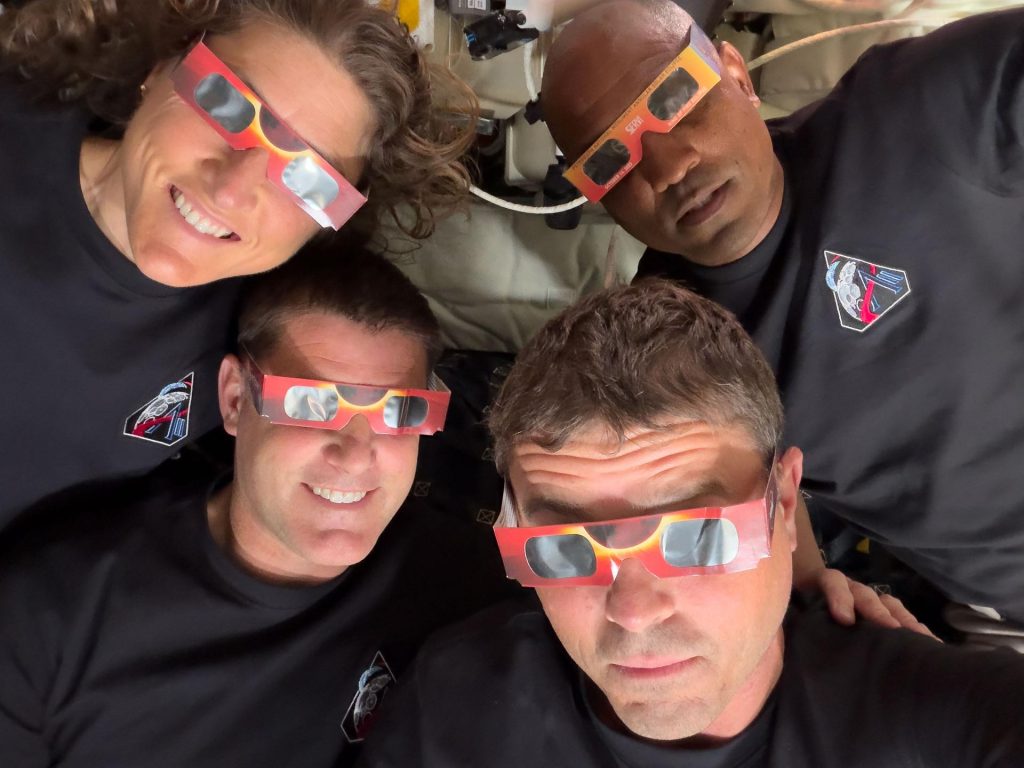
Four years later, Artemis II soared into action in 2026. Manned by commander Reid Wiseman, pilot Victor Glover, and mission specialists Christina Koch and Jeremy Hansen, the Orion spacecraft blasted off on 1st April 2026 on a 240,000 mile journey to the Moon and back. In addition, they easily broke the record for furthest human spaceflight in history: an astounding 252,757 miles away from the Earth.
It quickly became evident the crew had formed a special bond. Naming their spacecraft ‘Integrity’, the team worked hard over the following days to overcome any challenges. Their tasks included describing and photographing scientific features of the moon for study, keeping the spaceship in good function, and addressing the entire world through a constantly-running livestream.
Throughout the mission, the crew also took beautiful photographs of space, with photos of Earth’s aurorae, the rarely-witnessed phenomenon ‘Earth-set’, and a solar eclipse from the moon’s dark side especially striking.
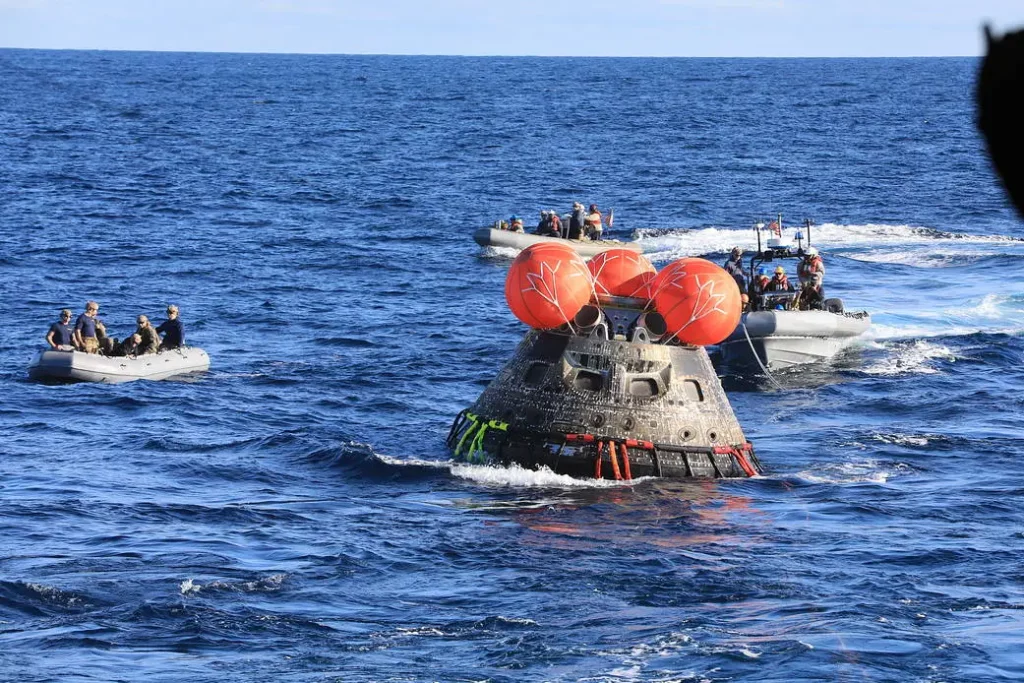
The mission drew to a close on the 10th of April, splashing down into the Pacific Ocean around 8:07pm Eastern Time (around 1:07am by the UK.). The astronauts could finally give a full report all their findings, experiments and discoveries to NASA, as well as return to their anticipating families.
For a few years, at least, the agency now has time to test, prepare and build up to Artemis III, the next mission down the line. Still, what’s next for NASA?
Artemis III, planned to take place during 2027, will provide private commercial companies SpaceX and Blue Origin a chance to partner with the mission, testing the rendezvous and docking procedures necessary to carry astronauts to the Moon. In addition, both companies will help NASA practice for Artemis’ further missions, although Artemis III will be in low Earth orbit.
The next two missions, however, will follow grander ambitions. Artemis IV plans to perform the first moon landing in 50 years, whilst Artemis V aims to establish the foundations for establishing a lunar base. Lunar Gateway, a hypothetical Moon space station, was even scrapped to move focus towards the $30 billion base.
After Artemis, who knows how far forwards humanity could go beyond Earth? For now, the Quarterly Gazette team will excitedly be watching this space.
- Daniella