Ask someone who discovered DNA and you’ll probably get two names – neither of them Rosalind Franklin. Her work was instrumental to one of sciences greatest breakthroughs, yet her contribution was almost forgotten – a harsh reminder of how easily women in science have been, and still are, overlooked.
On Wednesday, 11th February 2026, International Day of Women and Girls in Science shifts the focus from reflection to showcasing existing solutions for building more inclusive STEM ecosystems.
Today, women continue to represent less than one third of the world’s researchers, so by placing emphasis on new and emerging technologies, their influence on gender equality can be symbiotically promoted with the scientific phenomena.

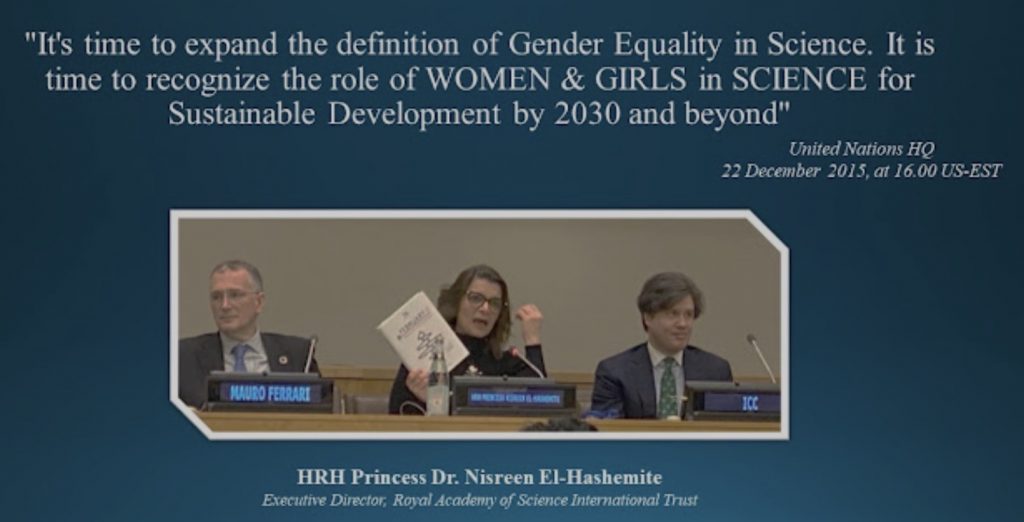
The concept for the international day was born at a high-level forum on women’s health and development with government ministers and UN agencies in 2015. Over 65 countries in the UN supported this notion, illustrating that despite differences in culture, norms and values, there is a collective interest in wanting to remove the barriers facing girls and women in STEM.
International Women and Girls in Science Day encourages equality not just for fairness, but because diverse scientific teams produce better solutions. When asked about her views on the importance of women and girls in science, a Gordon’s A-Level Biology student replied, ‘I believe we need to create a more dynamic and diverse environment where innovation can stem from the leadership of women and not just men.’
Gordon’s School has outwardly shown commitment to inclusion, for example a girl’s Coding Club was introduced as part of improving gender balance in computing.
Furthermore, a female science teacher reported that in teaching, she had never experienced gender inequality in her career, continuing to state that the science staff department here at Gordon’s is female heavy, and there are fluctuations of the majority of A-Level students being boys or girls each year. This balance is exactly what this day stands for, forward thinking and inclusive environments.
Though we are not quite there yet; although possibly wanting to pursue a career in science, a young female student at Gordon’s felt as though girls in her science class were treated differently to the boys. Something as small as boys not being told off when they disrupt, reduces the confidence of young girls in STEM subjects, making them less likely to enjoy it.
Alarmingly, a recent 2023 survey found that 80% of young women in the UK felt they were not encouraged into tech careers at school, most saying that it was ‘meant for boys’.
Despite progress, women remain under-represented and under-valued in science, so highlighting their achievements within this globally recognised day can inspire future generations. It is a goal to ensure no woman goes unnoticed like Rosalind Franklin, and no breakthrough is buried or stolen.
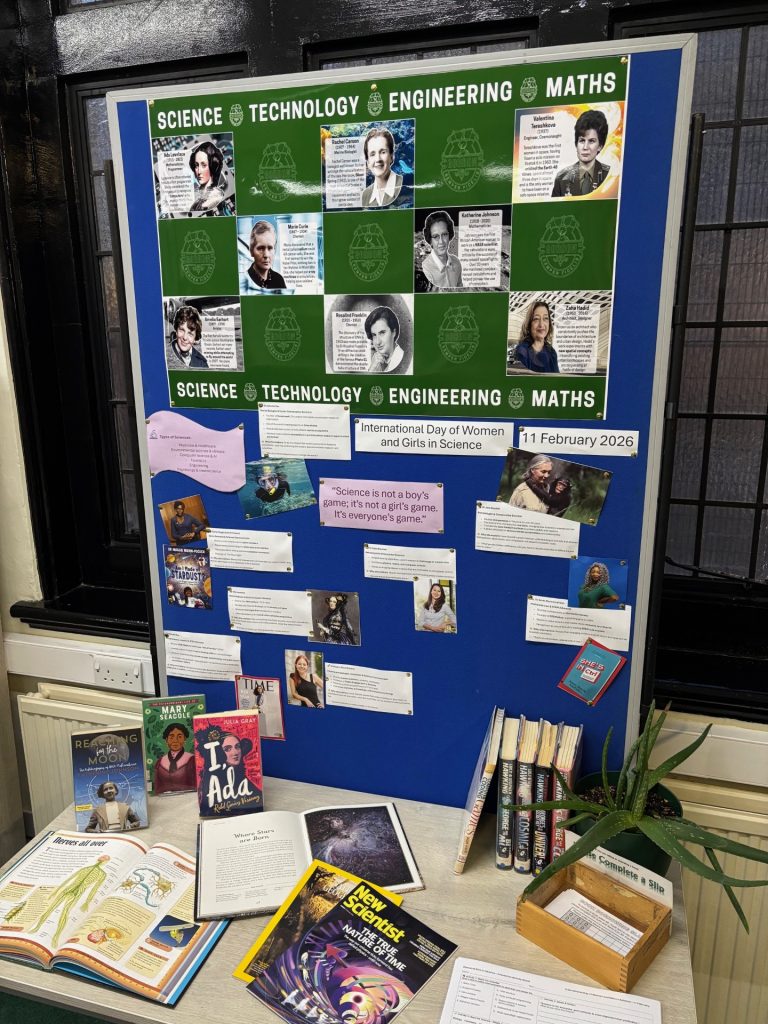
For more information, there is a display in the library regarding the topic including some interactive worksheets to complete, anyone is welcome to take part.
Everyone deserves a voice in STEM; this initiative highlights the importance of collaboration with peers for the most success. By working as a community and reaching a point of gender balance in the school, we can begin to turn this vision into an impactful representation of the capabilities of women and girls in science.
- Anna, Y12 Scholar